
- Ticketing
- Voting
- Payouts
GH₵ 310,000 tracked to the cedi across a 3-city pageant tour
A pageant running auditions, voting and a finale across Accra, Takoradi and Tamale settled every stream from one dashboard — and cut reconciliation from three weeks to same-day.
- Client
- A national pageant organiser
- Location
- Accra, Takoradi and Tamale
- Published
- 11 March 2026
- Read time
- 3 min read
The situation
The pageant had four income streams and four different ways of recording them. Audition fees came in over Mobile Money to a personal number. Regional show tickets were sold by local coordinators, in cash. Public voting ran through a short code billed by a third party. Finale tickets were sold online through a form.
None of it was fraud. It was worse than fraud in one specific way: it was unknowable. Closing the books took about three weeks, and the organiser could not answer basic questions — which city was actually profitable, how much of the vote income was real versus reversed — until long after the decisions that depended on the answers had been made.
What we set up
The point was not to add a fifth system. It was to collapse the four into one ledger.
- Every stream as a product on one account: audition entries, per-city show tickets, vote bundles, and finale seats. Same checkout, same settlement, same report.
- Coordinators issued links, not tickets. A regional coordinator could sell as hard as they liked, but the money never touched their hands, which removed both the float and the accusation.
- Vote income on the same rail as ticket income, so a reversed payment removed the vote it had bought — automatically, rather than in a spreadsheet three weeks later.
- Per-city revenue and cost tags, so "is Tamale worth returning to" became a number rather than an argument.
What happened
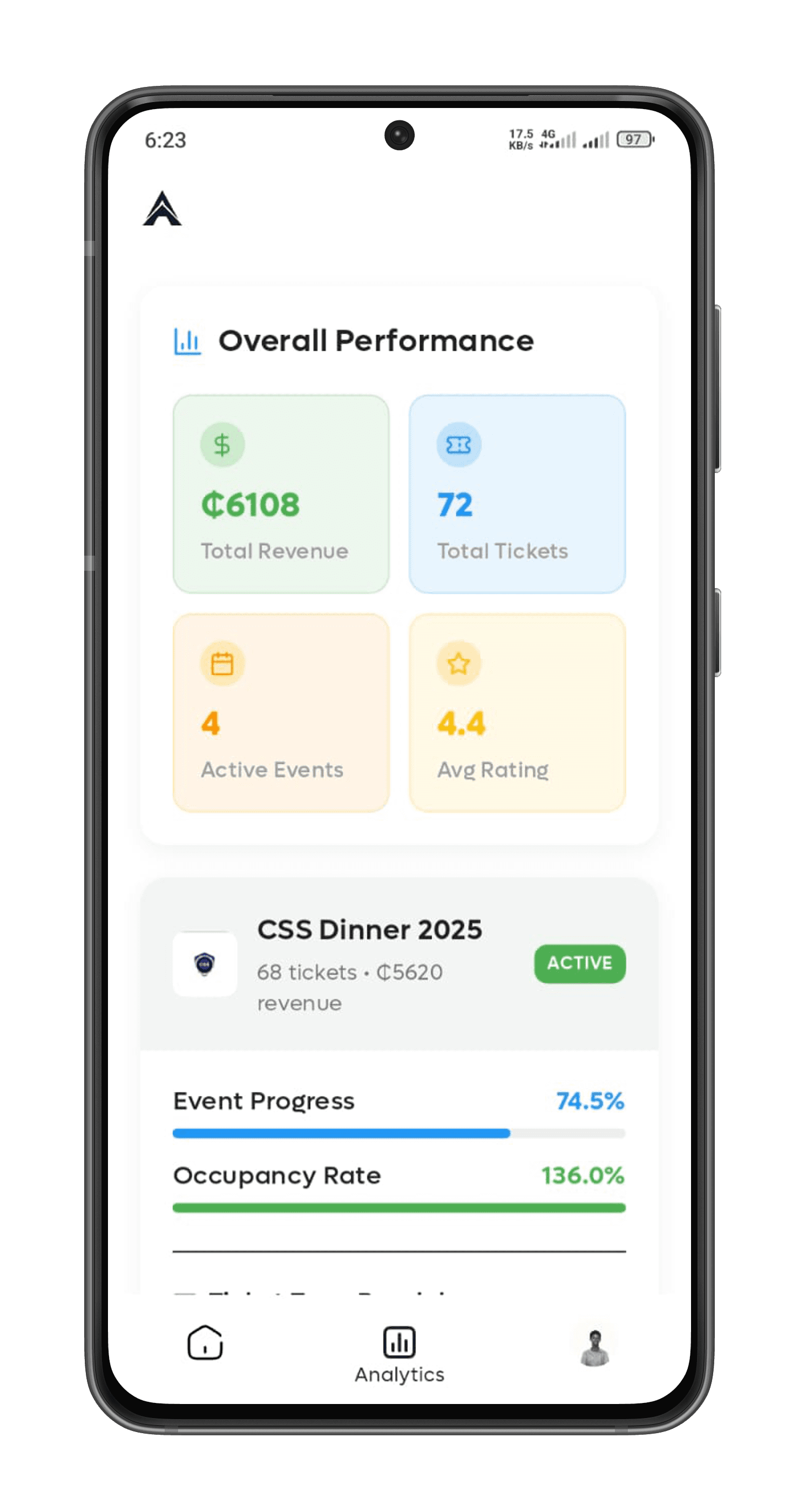
GH₵ 310,000 moved through the tour and every cedi of it landed in one report. Reconciliation went from roughly three weeks to same-day, because there was nothing to reconcile — the ledger was the record.
The most valuable output was not the total. It was the per-city breakdown, which showed that the smallest audience of the three produced the highest revenue per attendee by a wide margin, and that one of the two large cities had been running at a loss for two editions behind a healthy-looking gross number.
Vote reversals came to 2.1% of vote income. Under the old arrangement those votes had simply stayed counted.
"We found out that our smallest show was our best show. We had been about to drop it."
What we would do differently
Cost tags were entered after each city rather than before, so the first city's margin was reconstructed from receipts. Enter the budget as part of setting up the city and the margin is live from day one.
Reading this for your own event
Multi-stream events do not usually leak money — they leak knowledge, and by the time the books close the decisions are already made. If you run more than one income stream, the single highest-leverage change is putting them on one rail, even before you optimise any of them individually.